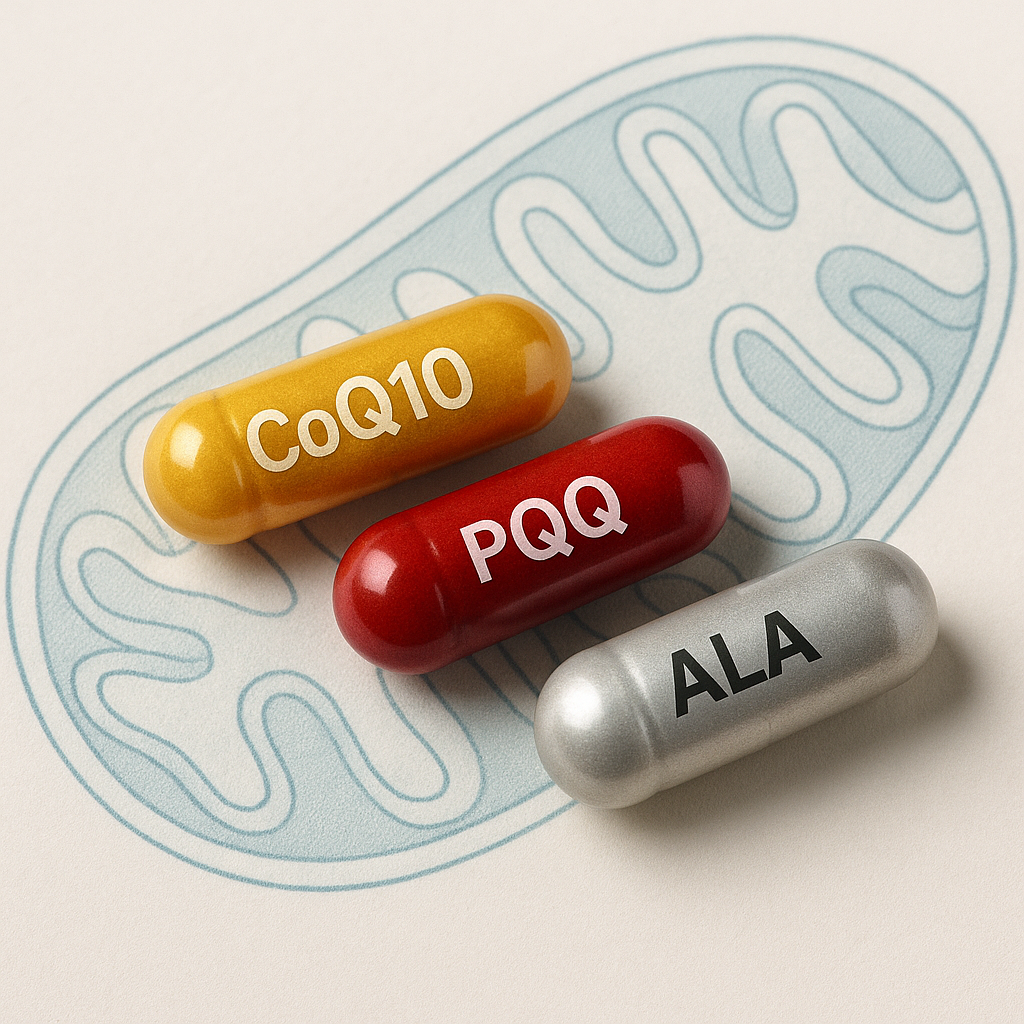
Mitochondrial Nutrients & Co-Factors: CoQ10, PQQ, Alpha-Lipoic Acid
September 4, 2025
Introduction
Mitochondria are the powerhouses of our cells. They are essential organelles involved in ATP production, cellular signaling, reactive oxygen species (ROS) handling, apoptosis, and autophagy. Aging, disease, inactivity, poor sleep, and chronic stress can be associated with changes in mitochondrial function which can lead to fatigue, impaired cellular repair and systemic inflammation. Targeted mitochondrial nutrients and co-factors can revitalize these organelles, enhance energy production, and bolster redox balance.
In this article, we’ll explore three commonly used compounds, Coenzyme Q10 (CoQ10), Pyrroloquinoline Quinone (PQQ), and Alpha-Lipoic Acid (ALA), including their biochemical roles, current clinical evidence, commonly used dosing ranges, and considerations for incorporating them into an individualized wellness plan.
Why Mitochondrial Support Matters
Mitochondria convert energy from nutrients into ATP through oxidative phosphorylation, which includes the electron transport chain (ETC). ROS are produced as part of normal metabolism and also serve important signaling functions; however, excessive or poorly controlled oxidative stress can damage mitochondrial DNA (mtDNA), proteins, and lipids. Key regulators such as PGC-1α help coordinate mitochondrial biogenesis, while antioxidant systems, including glutathione and superoxide dismutase, help maintain redox balance. CoQ10, PQQ, and ALA may influence electron transport, antioxidant defenses, and metabolic signaling.
Coenzyme Q10 (CoQ10)
Biochemical Role
CoQ10 (ubiquinone) transfers electrons from Complex I and Complex II to Complex III in the ETC. In its reduced form, ubiquinol, it also acts as a lipid-soluble antioxidant in cellular membranes and may help limit lipid peroxidation.
Clinical Benefits
- Energy & Fatigue: CoQ10 supports mitochondrial ATP production and cellular energy metabolism. Supplementation (100–300 mg/day) may help reduce fatigue in some individuals, including those with heart failure or statin-associated muscle symptoms.
- Cardiovascular Health: CoQ10 has been studied as an adjunct to standard medical therapy and may help support cardiovascular function. It may also be beneficial for patients taking statins by potentially reducing statin-associated muscle symptoms.
- Neuroprotection: CoQ10 is sometimes used for migraine prevention and has been studied for its potential to reduce migraine frequency. In Parkinson’s disease, CoQ10 has been investigated for its antioxidant properties and potential to reduce neuronal oxidative stress.
Dosing & Formulation
- Ubiquinol vs. Ubiquinone: Ubiquinol is the reduced form of CoQ10 and may have greater bioavailability.
- Typical Dose: A commonly used range is 100–300 mg daily, taken with a meal containing fat to improve absorption.
Pyrroloquinoline Quinone (PQQ)
Biochemical Role
PQQ is a redox-active compound that has been shown in preclinical research to influence pathways involved in mitochondrial biogenesis, including PGC-1α-related signaling.
Clinical Benefits
- Mitochondrial Biogenesis: Small human studies suggest PQQ may affect biomarkers related to mitochondrial signaling such as VO2 max in healthy adults.
- Cognitive Function: PQQ may support neuronal health and synaptic function while helping protect against oxidative stress and excitotoxicity, with potential benefits for cognition, mood, sleep quality, and fatigue.
- Cardiometabolic Health: Early research suggests that PQQ, particularly when combined with CoQ10, may support insulin sensitivity, mitochondrial function, and a healthier inflammatory response, potentially benefiting overall cardiometabolic health.
Dosing & Formulation
- Standard Dose: Commercial PQQ products commonly provide 10–20 mg daily.
- Timing: PQQ can be taken with or without food according to product directions and individual tolerance.
Alpha-Lipoic Acid (ALA)
Biochemical Role
ALA is a sulfur-containing cofactor involved in mitochondrial enzyme complexes, including pyruvate dehydrogenase and alpha-ketoglutarate dehydrogenase. It can also participate in redox reactions and help regenerate certain antioxidants.
Clinical Benefits
- Glycemic Control: ALA may have modest effects on insulin sensitivity and glucose metabolism.
- Neuropathy Relief: ALA has been studied most extensively for diabetic peripheral neuropathy. Some trials and reviews suggest that 600 mg daily may improve neuropathic symptoms.
- Redox Support: ALA may support antioxidant recycling and cellular defenses against oxidative stress (ROS), complementing broader strategies aimed at supporting cellular redox balance and NAD⁺ metabolism. ([Senolytics & Cellular Senescence], [Advanced NAD⁺ Therapies & Precursors]).
Dosing & Formulation
- Typical Range: 300–600 mg once or twice daily, taken on an empty stomach to enhance absorption.
- Precautions: ALA can lower blood glucose and may increase the risk of hypoglycemia when combined with diabetes medications. Consider thiamine status in people with heavy alcohol use, malnutrition, or other risk factors for deficiency.
Synergistic Protocols & Adjuncts
- Triple-Support Regimen
- Morning: PQQ 10–20 mg + CoQ10 (ubiquinol or ubiquinone) 100 mg with food
- Midday: ALA 300 mg, if tolerated and clinically appropriate
- Evening: CoQ10 100 mg with food + ALA 300 mg
- Lifestyle Synergies
- Exercise: Both endurance and resistance exercise can support mitochondrial adaptations and metabolic health.
- Intermittent Fasting: Fasting can affect nutrient-sensing pathways such as AMPK and sirtuins. ([Intermittent Fasting & Calorie Restriction]).
- Redox Nutrients: NAC (600mg BID) and glycine (1 g TID) are sometimes used to support glutathione synthesis.
- Monitoring & Adjustments
- Functional Markers: Symptoms, exercise tolerance, sleep, nutrition, medication changes, and fatigue or neuropathy scales.
- Biomarkers: Oxidative stress panels (8-oxo-dG, GSH:GSSG ratio) every 8–12 weeks.
Practical Takeaways
- Select Bioavailable Forms: Ubiquinol for CoQ10; micronized or solubilized ALA; high-purity PQQ.
- Divide Doses: Dividing CoQ10 or ALA may improve tolerability for some people.
- Coordinate with Meals: Take CoQ10 and PQQ with a fat-containing meal. ALA is commonly taken on an empty stomach for enhanced absorption.
- Integrate with Cellular Therapies: Mitochondrial nutrients can complement peptide therapies, NAD⁺ support, and targeted metabolic interventions by supporting cellular energy production, antioxidant defenses, and mitochondrial function.
Conclusion & Call to Action
Optimizing mitochondrial function is an important component of supporting cellular health, energy production, and healthy aging. CoQ10, PQQ, and ALA work through distinct yet complementary pathways, supporting the electron transport chain, mitochondrial biogenesis, antioxidant recycling, and cellular redox balance. When combined with lifestyle interventions, targeted nutrition, NAD⁺ support, and other mitochondrial strategies, these cofactors can provide a comprehensive approach to improving mitochondrial function and cellular resilience.
Ready to support your mitochondria at the cellular level? Book a consultation with Dr. Seeds today. Together, we’ll develop a personalized mitochondrial-support protocol incorporating strategies to support energy production, metabolic health, and long-term cellular function.